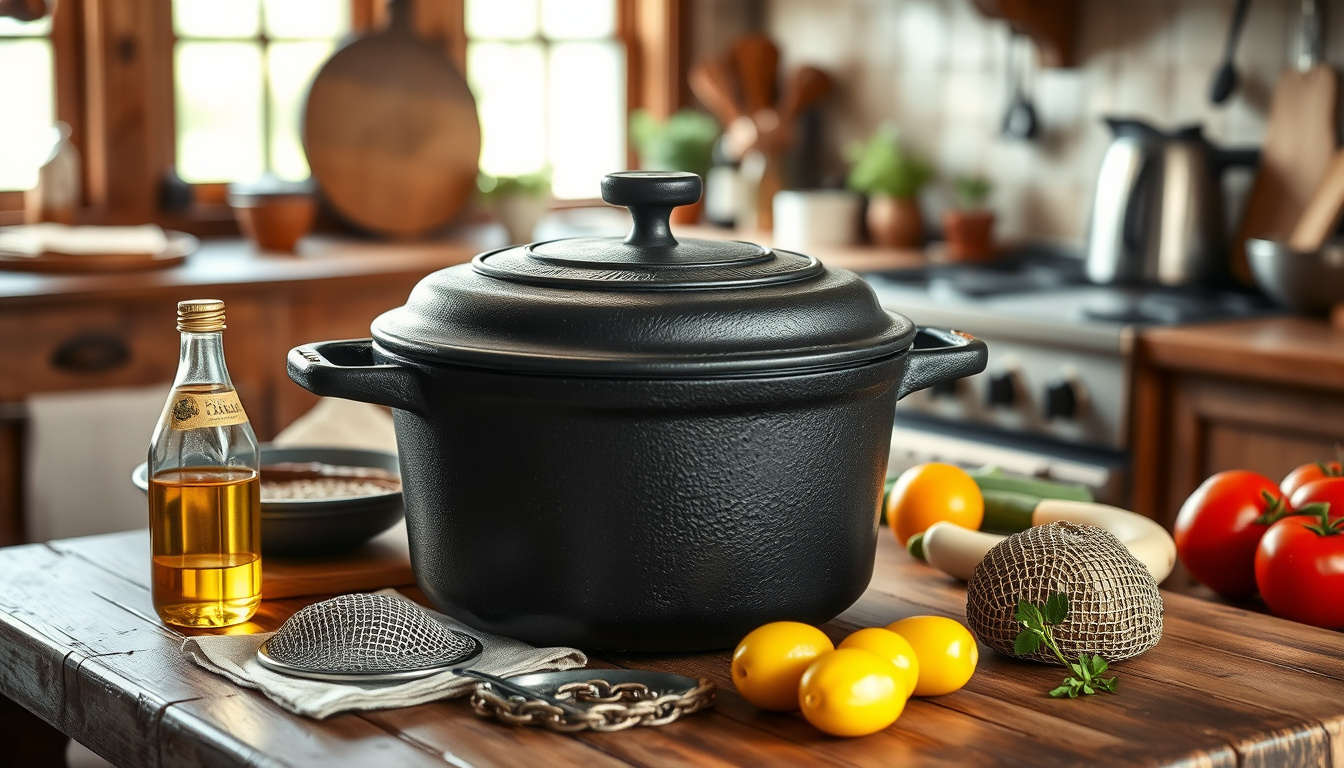

Cast iron pots are nearly indestructible, yet myths about demanding care have scared off generations of home cooks. The reality is straightforward: with basic habits like rinsing, drying, and light oiling, a cast iron pot outperforms most cookware for searing, oven use, and meals that benefit from retained heat.
Heat Retention: Excellent, retains heat longer than stainless steel · Weight Range: 5-10 kg for typical pots · Lifespan: Generations with proper care · Best For: Meats, searing, oven use · Common Brands: Le Creuset, IKEA, Lidl
Quick snapshot
- Cast iron handles metal utensils safely due to high durability (Lodge Cast Iron)
- Modern soap is mild enough for occasional use without stripping seasoning (IronClad Pan)
- Rust is fixable — scrub with steel wool, then re-season (Lodge Cast Iron)
- Whether exact toxicity thresholds exist for iron leaching under varied cooking conditions
- Optimal soap types or brands for regular cast iron cleaning
- Precise longevity data for cast iron cookware in Irish household settings
- Cast iron cookware used for centuries; myths persist due to outdated advice (IronClad Pan)
- Modern soaps milder than lye-based of past, changing care norms (Field Company)
- Lodge and IronClad pre-season all new pans at foundry with vegetable oil baked on (Lodge Cast Iron)
- Enameled cast iron growing in popularity as zero-maintenance alternative (Le Creuset IE)
- Irish retailers expanding cast iron ranges with humidity-conscious options (Le Creuset IE)
- Brands like Le Creuset offering localized care guidance for Irish market (Le Creuset IE)
These specifications apply to most standard cast iron cookware.
| Specification | Details |
|---|---|
| Material | Iron and carbon alloy |
| Heat Source | Induction, gas, electric, BBQ, campfire, oven |
| Maintenance | Regular seasoning required |
| Weight | Heavier than aluminum; 5-10 kg typical range |
| Utensils | Metal utensils safe to use |
| Enameled Variant | No seasoning required; wash in hot soapy water |
| Humidity Factor | High rust risk in Ireland’s damp climate |
| Satin Enamel Max Temp | 300°C (use seasoned cast iron for higher temps) |
What foods cannot be cooked in cast iron?
Acidic foods like tomatoes
Tomatoes, wine-based sauces, and other acidic ingredients pose a real risk to your seasoning. The acid can strip away the carbon layer that makes cast iron naturally non-stick, leaving your pot vulnerable to rust and making future cooking harder. Cooking highly acidic dishes in bare cast iron essentially undoes the seasoning you’ve built up.
Eggs and delicate items
Eggs and other delicate foods present a different challenge: cast iron’s exceptional heat retention makes temperature control tricky. Even after you reduce the heat, the iron keeps cooking at high temperatures, which can cause eggs to stick or overcook. This isn’t about damaging the pot — it’s about technique. A well-seasoned pan solves most sticking problems, but beginners often prefer a lighter touch.
The pattern across these food restrictions is consistent: they challenge the seasoning, not the pot itself. Cast iron is nearly indestructible, but the seasoning that gives it non-stick powers takes time to rebuild if damaged. Knowing what to avoid helps you keep your pot in cooking shape for decades.
What are the disadvantages of using a cast iron pot?
Heavy weight
A typical cast iron pot weighs between 5 and 10 kg, making it noticeably heavier than aluminum or stainless steel alternatives. Lifting a full pot of stew off a low stove, sliding it into a high oven, or just storing it in a cabinet requires real effort. For people with mobility concerns or smaller kitchens, this weight is a genuine practical drawback.
Maintenance needs
Cast iron demands attention that modern non-stick pans don’t. You need to season it initially and periodically after that, dry it immediately after washing, and apply a thin coat of oil to prevent rust. These steps take minutes, but they require a habit that busy home cooks may find inconvenient.
Why did people stop using cast iron?
The convenience era arrived with lightweight aluminum cookware and non-stick coatings, giving home cooks easier options. Cast iron’s reputation for being high-maintenance and difficult scared people away during this shift. Add in the weight factor, and many families quietly packed away their cast iron in favour of something simpler.
The catch is that cast iron’s reputation for fragility and demanding care is outdated. Modern pre-seasoned pans from manufacturers like Lodge arrive ready to use straight from the box, and the daily routine is straightforward: rinse, dry, oil. That’s it. Once you build the habit, maintenance takes thirty seconds.
Is cast iron cookware toxic free?
Seasoning safety
The seasoning on cast iron — typically a 100% natural carbon deposit from baked oil — poses no toxicity risk. According to Lodge Cast Iron, the factory seasoning is not a chemical coating but layers of polymerized oil that bond to the iron surface during high-heat baking. This natural process creates the non-stick layer without introducing harmful chemicals into your food.
Leaching concerns
Iron does leach into food during cooking, but for most people this represents a dietary benefit rather than a concern. Iron deficiency is common, particularly among certain age groups, and cooking in cast iron — especially with acidic foods — can contribute meaningful amounts of dietary iron. The amounts are small and generally beneficial rather than dangerous.
For individuals with hemochromatosis or other iron overload conditions, discuss cooking with cast iron with your doctor. For everyone else, the iron that transfers to your food is typically a nutritional plus.
Can I wash my cast iron with soap?
Modern soap myths
The old rule — never use soap on cast iron — stems from lye-based soaps that once dominated the market. Lye is harsh enough to break down seasoning. Modern dish soaps contain no lye and are mild enough for occasional use without damaging your seasoning, according to IronClad Pan. Occasional soap use, followed by thorough rinsing and immediate drying, won’t ruin your pan.
Drying steps
Regardless of whether you use soap, thorough drying is non-negotiable. Cast iron rusts when left wet, and Ireland’s humid climate makes this a particular risk. After washing, dry the pot immediately with a towel, then place it on low heat for a minute to drive off any remaining moisture. Finally, apply a thin coat of oil to all surfaces before storing.
The implication: your grandmother’s absolute soap prohibition was correct for her time but no longer applies. Modern mild soaps are safe in moderation — the real rule is always dry immediately and maintain that thin oil layer.
Soap-free cleaning preserves more natural oils in the seasoning, potentially building a better patina over time. But soap cleaning is faster and more effective at removing grease. Choose based on your priorities: long-term seasoning quality or daily convenience.
Why does food taste better in cast iron?
Heat distribution
Cast iron distributes heat evenly across its surface, eliminating hot spots that cause uneven browning. This even heat translates directly to better searing — meat develops a consistent crust rather than patchy colouring. The retained heat also means the cooking surface stays hot even when you add cold meat, avoiding the temperature drop that leads to steaming instead of searing.
Natural seasoning
With each use, the seasoning on cast iron builds and improves. Oils polymerize onto the surface, creating layers that enhance natural non-stick properties and contribute subtle flavour. Over years of regular cooking, a well-maintained cast iron pot develops a cooking surface that genuinely improves food — a patina that skilled chefs prize for the depth it adds to dishes.
The pattern: cast iron rewards patience and consistency. Unlike non-stick pans that degrade with use, cast iron gets better the more you cook with it. That investment in care pays dividends in the kitchen for years or even generations.
Retailers stock cast iron across all price tiers, from budget to premium options.
| Buying Options | Retailers | Price Tier |
|---|---|---|
| Nisbets | Commercial-grade pots | Mid to premium |
| Lidl | Enamelled options | Budget |
| IKEA | Everyday cast iron | Budget to mid |
| Le Creuset | Premium enamelled | Premium |
Upsides
- Superior heat retention compared to stainless steel
- Lasts generations with proper care — not decades, but lifetimes
- Safe with metal utensils — no delicate coatings to protect
- Versatile across all heat sources: hob, oven, BBQ, campfire
- Natural non-stick surface improves with use
- Adds dietary iron to food
Downsides
- Heavy weight: 5-10 kg makes handling difficult
- Requires regular seasoning and maintenance
- Rust prone if left wet — Ireland’s humidity raises this risk
- Not dishwasher safe under any circumstances
- Temperature control requires learning curve for beginners
- Acidic foods can damage seasoning
How to Season a Cast Iron Pot
Seasoning builds the protective, non-stick layer that makes cast iron cookware effective. New from the box, most modern pans arrive pre-seasoned at the foundry with vegetable oil baked at high temperature, but additional seasoning improves the surface.
- Clean the pot with warm water and a natural fibre brush; dry completely
- Apply a thin coat of unsaturated fat — vegetable oil, canola oil, or flaxseed oil work well
- Place upside-down in an oven preheated to 450°F
- Bake for 30 minutes, then let cool in the oven
- Repeat the process two more times for a strong initial seasoning
New Lodge cast iron arrives pre-seasoned at the foundry with vegetable oil baked on — you can start cooking immediately, but adding your own seasoning layers accelerates the building of that prized patina.
How to Restore and Clean Cast Iron
Restoring rusty cast iron
Rust doesn’t ruin cast iron — it just needs attention. Scrub the rusted area with steel wool under warm water, rinse thoroughly, dry immediately, and re-season following the seasoning process above. For heavy rust, a soak in a 1:1 solution of white vinegar and hot water softens the buildup before scrubbing.
Daily cleaning routine
Clean cast iron immediately after use while still warm. Rinse under warm water and scrub gently with a natural fibre brush or plastic scraper — avoid steel wool on seasoned pans. Dry immediately with a towel, then place on low heat briefly to ensure complete dryness. Apply a thin oil coat before storing.
Cast Cookware notes that Ireland’s humid climate increases rust risk significantly — extra attention to drying and oiling makes a bigger difference here than in drier countries. A few extra seconds of care prevents hours of restoration work later.
Buying Cast Iron in Ireland
Irish retailers offer cast iron across all price points. Budget options from Lidl and IKEA provide solid everyday performance. Mid-range selections at Nisbets suit home cooks wanting quality without premium pricing. Le Creuset commands the top tier with enamelled options that eliminate seasoning entirely — a practical choice for humid Irish kitchens where rust prevention demands more vigilance.
The pattern across retailers is consistent: demand for cast iron is growing as more home cooks discover that the maintenance reputation is largely myth. Whether you choose raw or enamelled depends on how much routine care you want to commit to — the trade-off between effort and investment plays out differently for each household.
Lodge Cast Iron (American manufacturer):
Cast iron is the most durable metal you’ll ever cook with. Your Lodge seasoning is 100% natural.
IronClad Pan (Cookware brand):
It’s not fragile. It’s not high-maintenance. And it’s definitely not stuck in the past.
IronClad Pan (Cookware brand):
The daily routine is simple: rinse, dry, oil. That’s it.
Le Creuset Ireland (Cookware brand):
Enamelled cast iron eliminates the need for seasoning while offering the same heat retention — practical for humid kitchens where rust prevention demands extra vigilance.
For Irish home cooks weighing cast iron against the convenience of lighter alternatives, the calculus is straightforward: the effort required is modest once you build the habit, and the payoff in heat performance and longevity is substantial. Enameled cast iron offers a genuine middle path for those who want cast iron’s heat retention without the seasoning routine — but raw cast iron, properly cared for, rewards its keepers with cookware that genuinely improves over decades of use.
How do you season a cast iron pot?
Apply a thin coat of unsaturated fat such as vegetable oil or canola oil, bake at 450°F for 30 minutes, and repeat the process three times for full seasoning. Always dry completely before storing.
What is the best oil for cast iron?
Unsaturated fats work best — vegetable oil, canola oil, and flaxseed oil all polymerize well at high temperatures to create a durable seasoning layer.
Can cast iron go in the oven?
Yes. Cast iron is oven-safe and works on all hob types including induction, gas, electric, BBQ, and campfire. Enamelled cast iron handles temperatures up to 300°C; use seasoned raw cast iron for higher heat.
How heavy is a typical cast iron pot?
A typical cast iron pot weighs between 5 and 10 kg, making it noticeably heavier than aluminum alternatives. This weight contributes to excellent heat retention but requires care when handling.
Are enamelled cast iron pots better?
Enamelled cast iron eliminates the need for seasoning and resists rust, but raw cast iron develops superior non-stick properties over time with proper care. The choice depends on your willingness to maintain seasoning versus paying more for a zero-maintenance option.
Where to buy cast iron pots in Ireland?
Major retailers include Le Creuset (premium enamelled), IKEA and Lidl (budget to mid-range), and Nisbets (commercial-grade options). Specialty cookware shops also stock cast iron from various brands.
How to restore vintage cast iron?
Soak rusted areas in a 1:1 solution of white vinegar and hot water, scrub with steel wool as needed, rinse thoroughly, dry immediately, and re-season. The process restores even heavily neglected cast iron to full cooking condition.
Related reading: Pork Ribs Recipe · Authentic Mapo Tofu Recipe
billysboudin.com, theirishmanswife.com, castcookware.com, ironcladpan.com, oryoki.de, youtube.com, youtube.com, boroughkitchen.com
Ireland shoppers comparing Lidl deals to upscale cast iron like Le Creuset should consult this Le Creuset Dutch oven guide for reviews and smart alternatives.

Andrew Ellis leads fact-checking, source verification and corrections at Oz Insightlab.