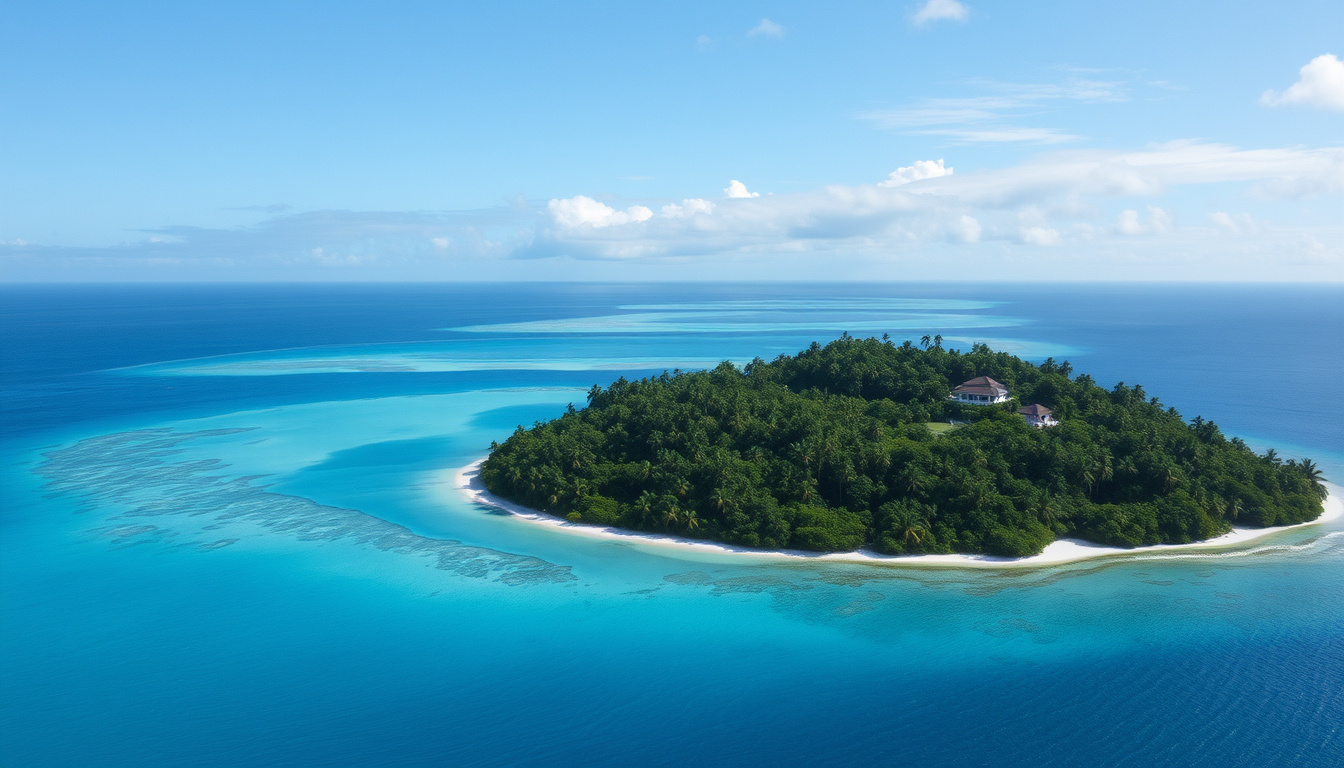

There’s a place on Earth where approaching within a few miles can land you in prison—and where the residents have made it abundantly clear through arrows and spears that visitors are not welcome. North Sentinel Island sits in the Bay of Bengal, a sliver of land roughly 60 square kilometres that has kept the outside world at arm’s length for thousands of years. Few places on the planet maintain such resolute isolation, and the story of why that matters unfolds in ways both legal and deeply human.
Location: Andaman Islands, Bay of Bengal · Inhabitants: Sentinelese tribe · Estimated Population: 50-200 · Protection Status: No-entry zone by Indian government · Known Contacts: Hostile rejections since 1947
Quick snapshot
- Illegal to visit under India’s Andaman and Nicobar Islands Protection of Aboriginal Tribes Regulation, 1956 (Britannica)
- Hunter-gatherer lifestyle based on fishing and foraging (Survival International)
- Population estimates range between 35 and 500, with most credible counts between 50 and 200 (Wikipedia)
- Exact current population; counts vary dramatically from 13 to 400 depending on method and year (Wikipedia)
- Genetic origins and whether they’re connected to African populations (EBSCO Research Starters)
- Internal social structure, governance, and cultural practices remain largely unknown (Wikipedia)
- 1967: First documented hostile contact with Indian expedition; two Sentinelese killed (Wikipedia)
- 2004: Indian Ocean tsunami devastated the island; officials met with spears when attempting survey (World Population Review)
- 2018: American missionary John Allen Chau killed after illegally visiting the island (Britannica)
- 2019: India reaffirms strict no-access zone following the Chau incident (Britannica)
- Indian government maintains patrols and strict enforcement around the 5 km exclusion zone (Britannica)
- No plans for contact; isolation remains official policy protecting tribe from disease (Survival International)
- Ongoing monitoring limited to long-distance observation and aerial surveys (Wikipedia)
The table below consolidates key facts about North Sentinel Island’s geography, legal status, and population.
| Category | Details |
|---|---|
| Archipelago | Andaman Islands |
| Home to | Sentinelese tribe |
| Access | Prohibited by law |
| Residency | Estimated up to 60,000 years |
| Population estimate | 50-200 |
Why is going to North Sentinel Island illegal?
North Sentinel Island is not simply a remote destination—it is a legally protected tribal reserve where unauthorized access carries serious criminal consequences. The Indian government has constructed a multi-layered legal framework specifically designed to keep the outside world away from the Sentinelese, and for good reason: history shows what happens when isolated tribes encounter outsiders.
Legal protections by India
The primary legal shield is the Andaman and Nicobar Islands (Protection of Aboriginal Tribes) Regulation, enacted in 1956. This regulation designated North Sentinel Island a tribal reserve and explicitly prohibited anyone from approaching within 5 kilometres of its shores—a distance that extends to surrounding waters as well. Violators can face prosecution under multiple statutes, including the Indian Forest Act (1927), the Wildlife (Protection) Act (1972), and the Scheduled Castes and Scheduled Tribes (Prevention of Atrocities) Act (1989). The February 2019 reaffirmation by the Ministry of Home Affairs made clear that this protection remains active and enforced.
Risks to tribe and visitors
The isolation policy exists because neighboring tribes offer cautionary evidence. The Great Andamanese, Onges, and Jarawas all experienced catastrophic population declines after sustained contact with outsiders resulted in disease spread, land encroachment, and exploitation. The Sentinelese have no immunity to diseases that modern visitors carry casually—flus, colds, or worse. For the estimated 50 to 200 individuals who call this island home, a single outside contact could trigger an extinction-level outbreak. For visitors, the risk is equally real: the Sentinelese have demonstrated, repeatedly and forcefully, that they view outsiders as threats.
The legal framework protected the tribe for decades—until August 2018, when the Indian government temporarily removed Restricted Area Permit (RAP) restrictions for 29 islands in the Andaman and Nicobar chain. Within months, an American missionary had made his way to North Sentinel Island and was killed. The episode exposed how quickly protections can erode when bureaucratic changes intersect with determined individuals.
What do North Sentinelese eat?
Understanding what sustains the Sentinelese offers insight into how this community has maintained self-sufficiency for millennia. Their diet reflects the island’s geography: surrounded by rich fishing grounds and carpeted with tropical vegetation, North Sentinel provides nearly everything the tribe needs.
Hunting and gathering
The Sentinelese are hunter-gatherers who rely primarily on fishing. Their waters provide fish, shellfish, and other marine life that form the backbone of their nutrition. They also hunt wild pigs found on the island and gather fruits, tubers, and other plant foods. Notably, no form of agriculture has been observed—the Sentinelese have maintained a fully foraging lifestyle without domesticating crops or livestock.
Island resources
The 2004 Indian Ocean tsunami offered a tragic demonstration of how reliant the Sentinelese are on their fishing grounds. The earthquake uplifted portions of the island and flooded critical areas, disturbing what researchers believe were sacred fishing spots that comprised much of their diet. When Indian officials sent a helicopter to survey damage and offer assistance, they were met with stones and spears—the tribe was defending not just territory but their food supply.
The 2004 tsunami disrupted more than housing and routines—it reshaped the physical landscape the Sentinelese had relied on for generations. That they survived and recovered without external assistance demonstrates both the resilience of their lifestyle and the potential fragility if future disturbances hit the same vulnerable zones.
How many Sentinelese are alive?
Counting people who don’t want to be counted—and who respond to observers with weapons—presents obvious challenges. The population estimates for the Sentinelese span a bewildering range, and no one really knows how many individuals the island actually supports.
Population estimates
Credible population estimates place the Sentinelese between 50 and 200 individuals. Historical counts vary dramatically: the 1971 census estimated 82 people, while the 1986 expedition recorded the highest count at 98 individuals. The 2011 census of India counted just 15 residents in what The Times of India described as “a wild guess”—reflecting how difficult it is to conduct accurate population work when direct contact is prohibited. More recently, a 2016 handbook by the Anthropological Survey of India estimated between 100 and 150 people, while one 2018 estimate suggested the population could reach 400—though this higher figure lacks broad consensus.
Counting challenges
The discrepancy between estimates stems from methodology: censuses rely on distant observation from boats or aircraft, a 2014 circumnavigation recorded six women, seven men (all apparently under 40), and three young children, while post-tsunami expeditions counted 32 and then 13 individuals in consecutive years. The Sentinelese move between visible beach areas and interior forest cover, making synchronized counts nearly impossible without intrusive surveillance that would violate the tribe’s legal protections.
Do planes fly over North Sentinel Island?
The question of airspace over North Sentinel Island has both practical and symbolic dimensions. Air routes exist in the region, but restrictions around the island are tight enough that casual overflights are not permitted.
Overflight restrictions
Standard aviation practice routes most flights well clear of North Sentinel Island, and the Indian government maintains restrictions on low-level overflights near the island. Limited aerial surveys have been conducted for population monitoring purposes, though these are carefully managed operations rather than tourist jaunts. The Foreigners (Restricted Areas) Order, 1963 governs access for foreign nationals and has historically limited activity around sensitive locations in the Andaman and Nicobar chain.
Observation methods
Most population knowledge comes from distant observation during periodic Indian government expeditions. Boats maintain the legally mandated 5-kilometer distance while observers attempt visual counts. Aerial surveys, when authorized, fly high enough to avoid triggering hostile responses while attempting to spot individuals moving in coastal areas. No sustained, close-proximity monitoring exists—by design.
Upsides
- Strict legal protections have preserved the tribe for over 60 years
- Hunter-gatherer lifestyle demonstrates sustainable existence without outside resources
- Population appears stable despite natural disasters and external pressures
Downsides
- Exact population remains unknown, complicating conservation planning
- No external medical support available if disease emerges
- 2004 tsunami demonstrated vulnerability to climate events
The Sentinelese have survived and remained on their island without having to depend upon the outside world. They are one of the world’s last truly uncontacted peoples.
— Survival International (advocacy organization protecting tribal rights globally)
North Sentinel Island was effectively a no-go zone under Indian law for decades, until a bureaucratic move in 2018 temporarily opened it up to closer inspection. That brief opening was followed by a tragedy that reminded the world why such protections exist.
— Britannica (encyclopedic reference on legal frameworks governing tribal reserves)
Are the Sentinelese people of African heritage?
The Sentinelese’s physical appearance—including their dark skin and distinct features—has prompted speculation about their origins. Researchers have noted certain characteristics shared with other Andaman Island populations, but definitive links to African ancestry remain unconfirmed.
Physical traits
The Sentinelese exhibit features often described as Negrito characteristics: dark skin, short stature, and curly hair. These traits are common among indigenous populations throughout the Andaman Islands, including the Great Andamanese, Onges, and Jarawas. The physical similarities suggest shared ancestry within the region rather than distant African origins.
Genetic theories
The Sentinelese are believed to be connected to other indigenous groups in the Andaman Islands through cultural and physical traits, but no direct genetic sampling has been conducted to establish definitive ancestry links. The tribe’s extreme isolation means no outsider has successfully made contact long enough to collect biological samples. Current theories position them as descendants of some of the earliest human migrations out of Africa, through a southern route that populated much of South and Southeast Asia—explaining regional similarities without requiring specific African heritage.
Related reading: health eligibility and disease risks similar to those facing isolated tribes
en.wikipedia.org, youtube.com, travelnoire.com, 960theref.com
The Sentinelese have fiercely guarded their isolation for millennia, as explored in detailed overview of the uncontacted tribe that echoes the island’s longstanding no-contact policies.
Frequently asked questions
Where is North Sentinel Island located?
North Sentinel Island is part of the Andaman Islands archipelago in the Bay of Bengal, approximately 22 miles (35 kilometers) west of the main inhabited islands of the Andaman and Nicobar Islands union territory of India. The island covers roughly 60 square kilometers—about 8 kilometers long and 7 kilometers wide.
Who are the people of North Sentinel Island?
The Sentinelese are an indigenous hunter-gatherer tribe who have lived on North Sentinel Island for what Survival International estimates at 60,000 years. They are designated a particularly vulnerable tribal group and a Scheduled Tribe under Indian law. They live in three groups, wear fibre strings (women) and carry spears, bows, and arrows (men), and maintain communal huts alongside temporary shelters.
Why is North Sentinel Island protected?
India protects North Sentinel Island under the Andaman and Nicobar Islands (Protection of Aboriginal Tribes) Regulation, 1956, which declared it a tribal reserve and prohibits approach within 5 kilometers. Additional protections come from the Indian Forest Act (1927), Wildlife (Protection) Act (1972), and Scheduled Castes and Scheduled Tribes Act (1989). The rationale is simple: other Andaman tribes experienced catastrophic population collapse after contact with outsiders due to disease, land encroachment, and exploitation.
Has anyone visited North Sentinel Island?
Authorized visits are prohibited, but the island has experienced unauthorized contact. The most infamous case was John Allen Chau, an American missionary who paid fishermen to take him to the island in November 2018. He was killed during the visit, and the incident prompted the Indian Ministry of Home Affairs to reaffirm the no-access zone in February 2019. Prior to this, hostile encounters with expeditions occurred as early as 1967.
What language do the Sentinelese speak?
The Sentinelese language remains unclassified and unlearned by outsiders. No outsider has successfully learned or documented the language due to the tribe’s hostility to contact attempts. It appears to be distinct from languages spoken by other Andamanese groups, though some researchers theorize connections based on cultural and physical trait similarities.
What threats do the Sentinelese face?
The primary threats are disease vulnerability (they have no immunity to outside pathogens), natural disasters (the 2004 tsunami demonstrated their exposure), and potential illegal contact attempts despite legal protections. Climate change poses an increasing threat as rising sea levels and intensifying storms could directly threaten their habitat and food sources.
Is North Sentinel Island visible on Google Maps?
Yes, North Sentinel Island appears on satellite imagery in mapping services, though the resolution is limited due to the island’s restricted status. What Google Maps cannot show is the 5-kilometer exclusion zone maintained by Indian authorities, or the daily reality of a people who have chosen—through millennia of experience—that visibility is not the same as welcome.
For policymakers, the lesson from North Sentinel Island is unambiguous: bureaucratic flexibility and well-intentioned individual actions can rapidly undermine protections built over decades. For researchers, the island remains a rare window into human existence without modern infrastructure—a living laboratory whose value is measured precisely in its inaccessibility. The tribe’s survival reflects not just their resilience but the effectiveness of an isolation policy that the rest of the world, despite its temptations, should continue to respect.

Andrew Ellis leads fact-checking, source verification and corrections at Oz Insightlab.