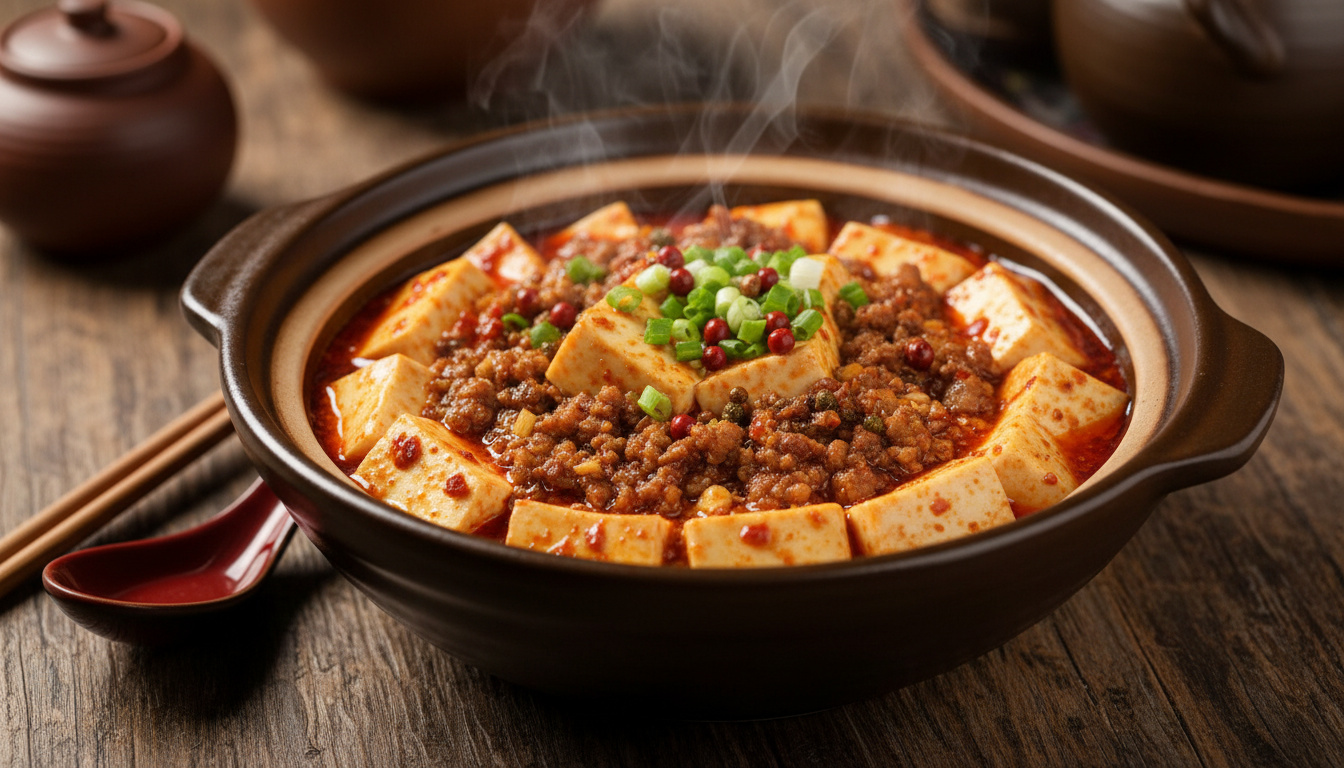
Mapo tofu represents one of Sichuan cuisine’s most compelling culinary achievements, transforming humble bean curd into a complex sensory experience. The dish centers on soft tofu cubes suspended in a crimson, glossy sauce that delivers the region’s signature ma la sensation—simultaneously numbing from Sichuan peppercorns and incendiary from fermented chilies.
Despite its sophisticated flavor profile, the preparation relies on precise technique rather than extensive ingredient lists. Success hinges upon the interaction between Pixian doubanjiang and properly handled tofu, a combination that has remained largely unchanged since the dish’s 19th-century origins.
- Soft or medium-firm tofu requires brief blanching in salted boiling water to maintain structural integrity during cooking.
- Pixian doubanjiang provides the essential fermented depth that defines the dish’s characteristic red oil.
- Toasting Sichuan peppercorns separately before grinding maximizes the numbing ma sensation.
- A cornstarch slurry added in the final moments creates the signature glossy sauce coating.
- Ground pork or beef must fry until crispy to provide textural contrast against the silken tofu.
- Gentle folding rather than vigorous stirring prevents tofu cubes from breaking apart.
- Immediate service with steamed rice balances the intense spice profile.
| Ingredient | Quantity | Preparation Notes |
|---|---|---|
| Tofu | 450g | Soft, medium-firm, or silken; cut into 1-2cm cubes |
| Ground pork or beef | 100-227g | Season lightly; fry until crispy |
| Pixian doubanjiang | 1.5-3 tbsp | Roughly chopped; the “soul” ingredient |
| Fermented black beans | 1 tbsp | Rinsed and chopped |
| Chili powder or flakes | 1-2 tbsp | For heat intensity |
| Sichuan peppercorns | ½-1½ tbsp | Ground or toasted for ma la |
| Ginger | 1 tsp | Minced |
| Garlic | 2-4 cloves | Minced |
| Scallions or garlic greens | As needed | Chopped for aromatics and garnish |
| Chicken stock or water | 1-2 cups | For simmering liquid |
| Shaoxing wine | 1 tbsp | For depth |
| Cornstarch slurry | 1 tbsp cornstarch + 1-2.5 tbsp water | For sauce thickening |
How Do You Make Mapo Tofu?
The preparation follows a specific sequence designed to preserve tofu integrity while building layers of flavor. Blanching the tofu in salted water firms the exterior, preventing disintegration during the vigorous saucing process. Minced meat fries separately until crisp, creating textural contrast against the silken bean curd.
What Are the Key Ingredients for Mapo Tofu?
Pixian Doubanjiang and Fermented Elements
The foundation of authentic flavor rests upon Pixian doubanjiang, a fermented broad bean chili paste aged for months or years. This ingredient contributes both the characteristic crimson hue and the complex umami depth impossible to replicate with fresh chilies alone. Fermented black beans (douchi) add another layer of savory intensity, requiring rinsing to moderate saltiness before chopping.
Protein and Preparation Techniques
Traditional preparations utilize ground pork, though beef serves as an acceptable alternative in some variations. The protein undergoes frying in neutral oil until achieving a crisp texture, then removal from the wok, leaving behind seasoned oil that carries forward into the sauce base.
Achieving the Ma La Sensation
The defining characteristic of proper mapo tofu emerges from the interplay between dried chilies and Sichuan peppercorns. The peppercorns contain hydroxy-alpha-sanshool, creating a tingling, numbing sensation (ma) that contrasts with the capsaicin heat (la) from the chili peppers. Toasting the peppercorns separately before grinding releases essential oils that permeate the finished dish.
Pixian doubanjiang remains non-negotiable for authentic results. Asian markets typically stock the red oil version, which provides additional flavor complexity through chili oil infusion during fermentation.
What Is Mapo Tofu and Is It Spicy?
The Signature Ma La Profile
Mapo tofu constitutes a classic Sichuan dish featuring soft tofu in a spicy, numbing sauce. The name derives from the Chinese mápó, referring to the pockmarked (ma) old woman (po) who created the dish in 1860s Chengdu. The signature ma la combination creates a flavor experience unique to Sichuan cuisine, simultaneously stimulating and anesthetizing the palate.
Adjusting Heat Without Losing Character
While the dish traditionally delivers intense spice, modifications accommodate varying tolerances. Reducing doubanjiang to two tablespoons while maintaining the fermented black beans preserves umami depth with moderated heat. Using milder varieties of Pixian doubanjiang or adjusting chili powder quantities allows customization without sacrificing authenticity entirely.
Authentic Mapo Tofu Recipe Variations
Vegetarian and Plant-Based Adaptations
Removing meat requires strategic substitution to maintain textural interest. Rehydrated shiitake mushrooms or wood ear mushrooms provide chewiness reminiscent of ground pork. Vegetable stock replaces chicken stock, creating a fully vegan preparation when omitting any animal-based seasonings. The ma la profile remains intact through preserved peppercorn and chili ratios.
Japanese and Korean Interpretations
Regional adaptations diverge significantly from the Sichuan original. Japanese mabo dofu typically incorporates miso and ketchup, resulting in a milder, sweeter profile without the numbing peppercorn sensation. Korean variations often resemble stews (dubu jjigae), utilizing gochujang rather than doubanjiang and frequently incorporating kimchi or seafood. These versions lack the characteristic ma la intensity and oily sheen of authentic Chengdu preparations.
Shiitake mushrooms offer the most convincing textural substitute for ground meat, particularly when finely chopped and fried until edges crisp. Wood ear mushrooms provide additional crunch but less umami depth.
No ideal substitute exists for Pixian doubanjiang. Korean gochujang combined with miso approximates fermented depth but significantly dilutes authenticity. Chili garlic sauce mixed with soy sauce serves only as a last resort.
Pistachio Papi Woolworths – Cheesecake Gelato Availability Guide
History and Origins of Mapo Tofu
- : The dish emerges from a roadside eatery in Chengdu operated by a pockmarked woman and her husband, earning the name mapo (pockmarked grandmother).
- : Recognition spreads throughout Sichuan as the dish gains fame for embodying the zhēn wèi (real deal) culinary philosophy through its bold ma la profile.
- : Standardization of ingredients occurs as Pixian doubanjiang becomes widely recognized as the essential flavor base.
- : Global expansion begins as Sichuan cuisine gains international traction, introducing mapo tofu to restaurants outside China.
- : Vegetarian and vegan adaptations proliferate in Western markets while traditional Chengdu preparations maintain strict adherence to original techniques.
What Defines Truly Authentic Mapo Tofu?
| Established Facts | Variable or Uncertain Elements |
|---|---|
| Originates from Chengdu, Sichuan Province in the 1860s | Exact original proportions of the Chen family recipe remain undocumented |
| Requires Pixian doubanjiang for fundamental flavor architecture | Whether air fryer techniques can achieve equivalent texture to traditional wok preparation remains unverified |
| Must feature both ma (numbing) and la (spicy) sensations | Precise sodium content varies significantly between doubanjiang brands and aging periods |
| Traditionally incorporates ground pork or beef | Optimal resting time before serving for flavor melding lacks consensus |
| Sauce requires cornstarch thickening to achieve proper coating consistency | Caloric calculations vary widely based on oil quantity and meat ratios |
Mapo Tofu in Sichuan Culinary Tradition
The dish embodies the philosophical underpinnings of Sichuan cookery, where flavor complexity emerges from the manipulation of fundamental sensations rather than ingredient abundance. The ma la profile represents a sophisticated understanding of sensory interaction, using the numbing properties of Sichuan peppercorns to create a palate-cleansing effect that allows for sustained enjoyment of intense spice.
Within Chengdu’s culinary landscape, mapo tofu occupies a unique position as both humble street food and refined restaurant offering. Its preparation tests a cook’s ability to control heat levels, wok technique, and timing—skills that distinguish professional Sichuan chefs. The dish demonstrates how texture, temperature, and chemical sensation combine to create something greater than the sum of its parts.
Expert Perspectives on Mapo Tofu
Pixian doubanjiang is considered the ‘soul’ ingredient for umami and spice. Without it, you lose the fundamental fermented depth that defines the dish.
— Red House Spice
The real deal mapo tofu must have that signature ma la flavor profile—numbing from Sichuan peppercorns and spicy from chilies.
— The Woks of Life
Serve sizzling hot with rice to balance the spice. The temperature is crucial to the experience.
Mastering Mapo Tofu at Home
Authentic mapo tofu rewards attention to ingredient quality and technique. Sourcing proper Pixian doubanjiang and Sichuan peppercorns matters more than elaborate preparation. The dish comes together rapidly—within 35 minutes—yet delivers complexity that belies its short ingredient list. For those seeking additional culinary exploration, consider checking the Coles Port Adelaide – Opening Hours Location Services for ingredient sourcing options in your area.
Frequently Asked Questions
Is mapo tofu gluten free?
Authentic mapo tofu can be made gluten free by substituting tamari for soy sauce and Shaoxing wine. Most doubanjiang varieties are naturally gluten free, but labels should be verified. Cornstarch, used for thickening, contains no gluten.
What is the calorie count per serving?
A 300-gram serving with pork contains approximately 350 to 500 calories, varying by oil quantity and meat ratio. Protein content ranges from 25 to 35 grams, with fat between 20 to 30 grams. Vegan versions typically reduce caloric density.
Can firm tofu be substituted for soft?
While soft, medium-firm, or silken tofu remains traditional, firm tofu works for quicker preparations. Skip the blanching step when using firmer varieties, as they hold structure without pre-cooking. Texture will differ from authentic preparations.
What are the best substitutes for doubanjiang?
No ideal substitute exists. Korean gochujang mixed with miso approximates fermented depth but lacks authenticity. Chili garlic sauce combined with soy sauce serves as an emergency alternative. Both substitutions significantly alter the final flavor profile.
Does authentic mapo tofu require MSG?
MSG appears as an optional ingredient in traditional recipes. One teaspoon enhances umami but remains unnecessary when using high-quality doubanjiang and fermented black beans. The dish achieves sufficient savory depth through fermented ingredients alone.
Related stories





Liam O'Brien covers Australian politics and public affairs for Oz Insightlab.