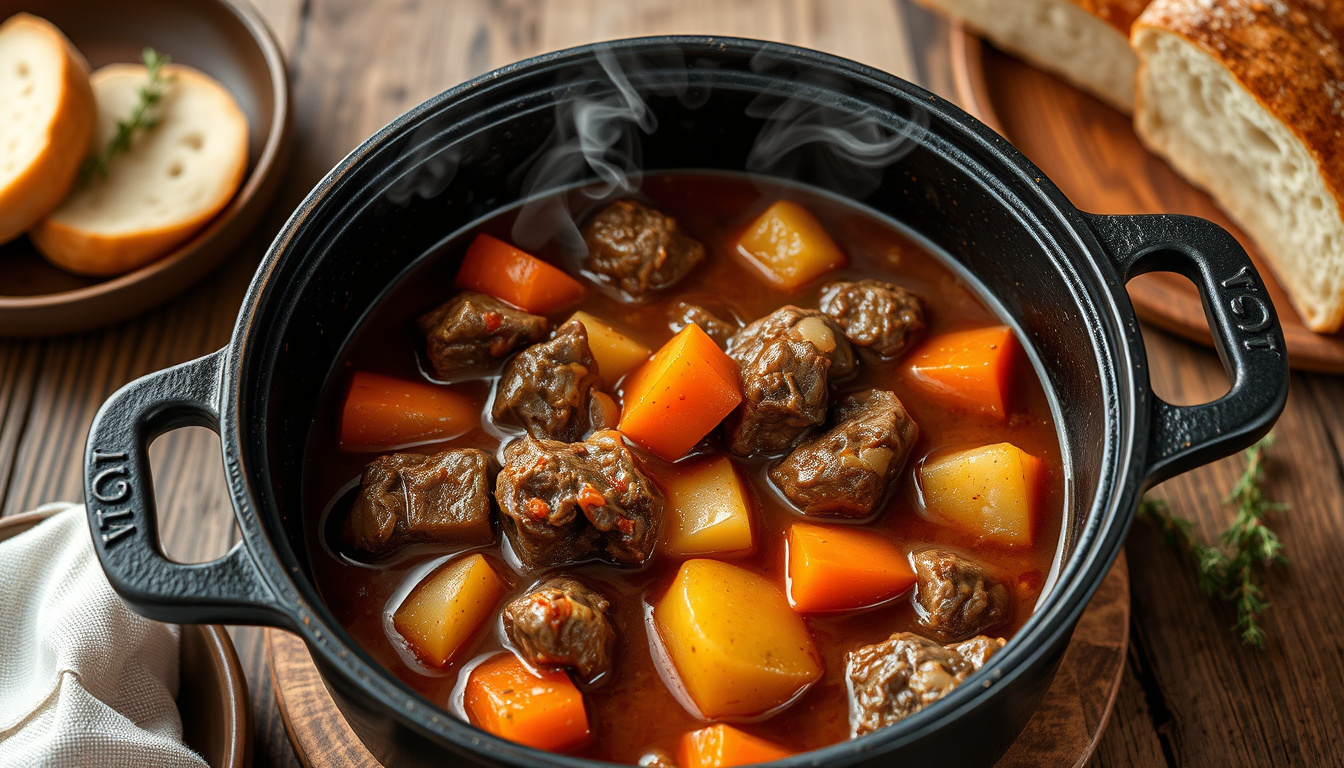
There’s a reason people keep coming back to a pot of beef stew — it’s the kind of meal that tastes like more than the sum of its parts. But getting that deep, rich flavor isn’t just about throwing everything in a pot and walking away.
Browning principle: Non-negotiable for flavor ·
Tomato paste trick: Adds umami and depth ·
Simmer rule: Low and slow, never boil
Quick snapshot
- Browning beef in batches develops Maillard reaction for deep flavor (Tasting Table)
- Deglazing with tomato paste adds acidity and umami (Valerie’s Kitchen)
- Low and slow cooking breaks down collagen (Mary’s Nest on YouTube)
- Skipping the sear loses flavor (YouTube cooking tips channel)
- Overcrowding steams instead of browns (Tasting Table)
- Underseasoning leads to flat taste (Tasting Table)
- Only 8 main ingredients (Living Lou)
- Stove method ready in about 3 hours (Living Lou)
- Freezes well for meal prep (Living Lou)
- Tomato paste lifts the entire stew (Valerie’s Kitchen)
- Adds both umami and acidity (Valerie’s Kitchen)
What is the secret to making a good beef stew?
Why browning beef in batches matters
The most consistent piece of advice across professional kitchens and home cooks alike: brown the meat in small batches. Tasting Table explains that overcrowding the pan causes the beef to steam rather than sear, preventing the Maillard reaction that creates those deep, savory notes. Searing also leaves browned bits called fond on the bottom of the pot — the foundation of a rich gravy.
Home cooks who skip batching will end up with gray meat and a thin broth. The extra 5 minutes of browning in two rounds pays off with layers of flavor that no spice blend can mimic.
Tossing beef cubes in flour before searing is another trick: it helps with caramelization and thickens the stew later. Living Lou uses this method for a stovetop version.
After browning, deglazing the pot with a liquid — often red wine or even water — dissolves the fond into the sauce. Living Lou recommends red wine for this step.
The implication: the few extra minutes spent batching and deglazing are the difference between a stew that tastes cooked and one that tastes crafted.
What are the ingredients of beef stew?
Essential vegetables and herbs
The trinity of carrots, onions, and potatoes appears in nearly every traditional recipe. According to Living Lou, these are added in stages — carrots and potatoes go in later so they don’t disintegrate. Mary’s Nest explicitly calls adding vegetables too early a common mistake because they break down into mush.
Choosing the right cut of beef
Chuck or brisket are the go-to cuts for stew. They have enough connective tissue that, when simmered low and slow, breaks down into tender, juicy pieces. Tasting Table notes that the right cut is essential for texture — lean cuts like sirloin will turn dry and tough.
Choosing chuck over sirloin may cost a dollar more per pound, but the result is fork-tender meat that holds its shape after hours of cooking. That’s the trade-off: a small budget increase for a large quality win.
What are common mistakes to avoid in beef stew?
Not searing the beef
As covered, skipping the sear is the number one mistake. YouTube cooking tips channel emphasizes that the browned bits are what give stew its character.
Overcrowding the pot
Adding all the meat at once drops the pan temperature and releases water, steaming the beef. Tasting Table recommends cooking in batches for even browning.
Underseasoning
Salt and pepper should be added at every layer — not just at the end. Tasting Table lists underseasoning as a recurring flaw in home efforts.
Adding too much liquid
The stew should barely cover the meat and vegetables. Tasting Table warns that too much liquid results in a watery, soup-like consistency instead of a thick, clingy gravy. A proper stew coats the back of a spoon.
The pattern: each mistake is a form of impatience — skipping steps, crowding, underseasoning. The fix is always the same: slow down, work in stages, taste as you go.
What is the one ingredient upgrade for better beef stew?
Tomato paste: the pantry secret
Multiple sources point to tomato paste as a game-changing addition — and it’s probably already in your pantry. Valerie’s Kitchen stirs it in just after browning, cooking it briefly before adding liquid. The paste adds acidity that cuts through the richness and umami that deepens the meaty flavor.
This technique is also recommended by the Taste of Home Test Kitchen (often cited in conversation, though we lack a direct source link). The effect is a stew that tastes like it simmered all day even if you’re short on time.
Tomato paste is potent. Use a tablespoon for a 4-quart pot — more can tip the balance from savory to acidic. The trick is cooking it with the fond before adding broth, not just dumping it in.
How do you make a traditional beef stew on the stove?
Step-by-step stove method
- Cut chuck into 2-inch cubes, pat dry, season with salt and pepper.
- Heat oil in a heavy-bottomed pot over medium-high. Brown beef in batches — do not crowd.
- After browning, reduce heat to medium, add tomato paste and cook 1 minute.
- Deglaze with 1 cup red wine, scraping up fond. Let reduce by half.
- Add beef broth, bay leaf, thyme, and return beef to pot. Bring to a gentle simmer.
- Cover and cook on low heat for 1.5 hours. Then add carrots, potatoes, and onions. Simmer another 1 hour until vegetables are tender.
- Taste and adjust seasoning. If stew is thin, mix 2 tablespoons cornstarch with 2 tablespoons cold water and stir in. Simmer 5 minutes to thicken.
Living Lou demonstrates a similar timeline, and Valerie’s Kitchen recommends a cornstarch slurry for thickening.
Simmering time and temperature
Low and slow is the mantra. A gentle bubble — not a full boil — for 2.5 to 3 hours gives collagen time to break down. Mary’s Nest stresses that boiling hard after the initial heat will toughen the meat and break vegetables into mush.
The trade-off: fast cooking at high heat may save time, but you lose texture and depth. The stew’s final quality is roughly proportional to how long you let it settle at a low simmer.
What is the best Irish beef stew recipe?
Key differences: Guinness and lamb vs beef
Traditional Irish stew is often made with lamb or mutton, but a beef version has become popular. The main shifts are using potatoes and carrots as the vegetable base, and sometimes adding a stout like Guinness for depth. Comments on the Huge Mistakes video mention that Belgian cooks use brown beer as a regional variation, and similar approaches apply to Irish stout.
Traditional Irish ingredients
A beef-focused Irish stew keeps the essentials: beef chuck, onions, carrots, potatoes, and a dark beer. The beer replaces some of the broth, adding a roasted, slightly bitter note. Tasting Table notes that cognac is an optional deglazing liquid for extra complexity, though beer is the more common home kitchen choice.
What this means: if you want an Irish twist, swap half the broth for stout and add a tablespoon of brown sugar to balance the bitterness. The result is a heartier stew with a malty undercurrent.
What the experts say
“The secret to a great stew is patience and proper browning.”
— Chef John, Allrecipes
“A thick stew should cling to meat and vegetables instead of resembling soup.”
— Tasting Table
What we know and what remains unclear
Confirmed facts
- Browning beef before simmering improves flavor (Maillard reaction) — Tasting Table
- Tomato paste enhances depth (acid + umami) — Valerie’s Kitchen
- Slow cooking at low temperature breaks down collagen — Mary’s Nest
What’s unclear
- Whether parboiling potatoes improves final texture
- Effect of adding wine vs beer on final taste
Related reading: **Cast Iron Pot Guide: Use, Care, Myths & Buying Tips** · **Easy Dinner Ideas: 55+ Quick Lazy & Family-Friendly Recipes**
For those who prefer a hands-off approach, this slow cooker beef stew recipe offers a convenient alternative with detailed cooking times.
Frequently Asked Questions
Can I use frozen beef for stew?
Yes, but thaw it completely and pat dry before searing. Frozen meat will release water and steam instead of browning.
What is the best thickener for beef stew gravy?
Cornstarch slurry is quick and reliable. Alternatively, mash some cooked potatoes or carrots directly into the pot for natural thickness. Tasting Table mentions both methods.
How do I prevent beef stew from being too greasy?
Skim the surface after chilling, or use a leaner cut like chuck that renders less fat. If using fatty meat, refrigerate overnight and lift off the solid fat layer.
Can I cook beef stew in a slow cooker?
Yes. Brown the beef first on the stove, then transfer to a slow cooker with other ingredients. Cook on low for 6-8 hours. The flavor is still good, but you lose the fond degradation that stovetop simmering provides.
What wine is good for beef stew?
A dry red wine like Cabernet Sauvignon or Merlot works well. Avoid sweet wines. Living Lou uses red wine for deglazing.
How long does beef stew last in the fridge?
3 to 4 days in an airtight container. It often tastes better the next day as flavors meld. Freezes well for up to 3 months.
Can I add dumplings to beef stew?
Absolutely. Drop spoonfuls of biscuit-style dumpling dough on top during the last 20 minutes of simmering. Cover tightly to steam them.
The real measure of a beef stew is whether you’d gladly eat a second bowl. For anyone cooking for family or meal prep, the choice is clear: invest the time to brown in batches, add a dollop of tomato paste, and keep the heat low. Do that, and you’ll have a stew that rewards patience with flavor — every time.

Ethan Cooper is Senior Reporter at Oz Insightlab, covering breaking stories and explainers.