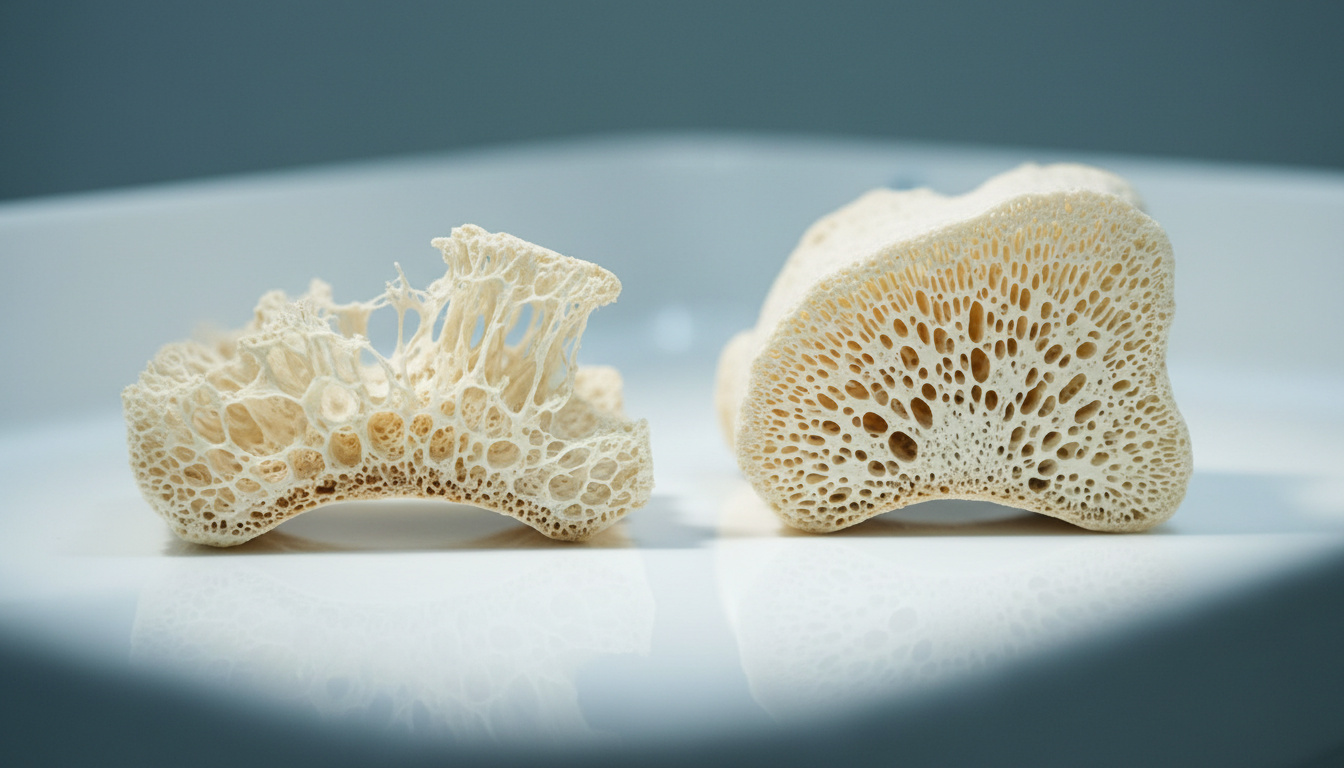
Osteoporosis is a skeletal disorder characterized by compromised bone strength, predisposing individuals to an increased risk of fracture. The condition develops when bone mineral density deteriorates and the microarchitecture of bone tissue weakens, resulting in fragile bones that can break from minor stresses such as coughing or bending over.
Medical literature often refers to osteoporosis as a “silent disease” because it typically progresses without symptoms until a fracture occurs. The National Institute of Arthritis and Musculoskeletal and Skin Diseases identifies it as the major cause of fractures in postmenopausal women and older men, with the hip, spine, and wrist representing the most common fracture sites.
Millions of people worldwide live with this condition, yet many remain undiagnosed until they experience a broken bone. Understanding the mechanisms behind bone loss, recognizing risk factors, and knowing when to seek screening can significantly alter the trajectory of this progressive disease.
What Is Osteoporosis?
A disease causing weak, brittle bones due to low bone mass and structural deterioration
Affects millions globally, primarily postmenopausal women and older men
Age over 50, estrogen decline, family history of fractures
Adequate calcium, vitamin D, and weight-bearing exercise
- Osteoporosis typically remains silent until a fracture occurs from minor trauma
- Bone density reaches its peak around age 35, then gradually declines
- Postmenopausal women may lose bone mass at 1-2% annually initially
- The condition represents the leading cause of fractures in older adults
- Diagnosis relies on DXA scanning with T-scores at or below -2.5
- Treatment protocols focus on slowing resorption and preventing falls
- Lifestyle modifications can reduce fracture risk significantly
| Fact | Detail |
|---|---|
| Peak Bone Mass | Achieved around age 35 |
| Postmenopausal Loss Rate | 1-2% annually initially |
| Osteoporosis T-Score | ≤ -2.5 |
| Osteopenia T-Score | Between -1.0 and -2.5 |
| Common Fracture Sites | Hip, spine (vertebrae), wrist |
| Recommended Screening (Women) | Age 65 and older |
| Recommended Screening (Men) | Age 70 and older |
| Diagnostic Method | DXA (dual-energy X-ray absorptiometry) |
What Are the Symptoms and Early Signs of Osteoporosis?
The insidious nature of osteoporosis means that early symptoms rarely manifest. Most individuals remain unaware of their compromised bone density until they sustain a fracture from minimal trauma—an event that signals advanced disease rather than early warning.
Fracture as First Indicator
For the majority of patients, the initial symptom takes the form of a broken bone. These fractures frequently occur in the hip, spinal vertebrae, or wrist following low-impact incidents that healthy bone would withstand. Vertebral compression fractures may develop gradually, causing chronic back pain, noticeable height loss, or kyphosis—a stooped forward posture resulting from spinal collapse.
Postmenopausal Acceleration
Women experience accelerated bone loss during the menopausal transition due to precipitous estrogen decline. While this phase marks the beginning of rapid density reduction, visible indicators such as fractures typically do not appear until years later, signaling the advanced stage of the condition rather than its onset.
Because osteoporosis develops without pain or visible deformity until fracture occurs, waiting for symptoms to appear leads to delayed diagnosis. Healthcare providers recommend screening based on age and risk factors rather than symptom complaints.
What Causes Osteoporosis and Who Is at Risk?
Osteoporosis develops when bone resorption outpaces formation, creating a net loss of skeletal mass. This imbalance stems from diverse factors ranging from biological aging to specific medical conditions and lifestyle choices.
The Biology of Bone Loss
Healthy bone undergoes constant remodeling, with old tissue resorbed and new tissue formed. Osteoporosis emerges when this equilibrium fails, whether through excessive bone removal, insufficient new bone creation, or both. The process accelerates with age as cellular activity naturally slows.
Non-Modifiable Risk Factors
Certain risk factors cannot be altered. Age remains the primary determinant, with bone density declining significantly after age 50. Female sex—particularly postmenopausal status—elevates risk due to estrogen loss. Caucasian and Asian ethnicities show higher incidence rates, as does having a family history of osteoporosis or hip fracture. A small, thin body frame also correlates with increased vulnerability.
Modifiable Contributors
Lifestyle choices substantially influence bone health. Chronic calcium and vitamin D deficiency forces the body to extract minerals from skeletal stores. Smoking tobacco and consuming more than two alcoholic drinks daily impair bone formation. Physical inactivity deprives bones of the mechanical stress necessary to stimulate density maintenance.
Low estrogen levels after menopause in women, and low testosterone in men, significantly increase osteoporosis risk. Hormonal disorders such as hyperthyroidism and amenorrhea also contribute to accelerated bone loss.
Medical Conditions and Medications
Underlying health conditions including celiac disease, inflammatory bowel disease, rheumatoid arthritis, diabetes, and HIV/AIDS interfere with nutrient absorption or bone metabolism. Gastrointestinal surgery and endocrine disorders further compromise skeletal integrity.
How Is Osteoporosis Diagnosed?
Accurate diagnosis requires specialized imaging rather than physical examination or blood tests alone. Medical guidelines establish specific criteria for testing and interpretation of results.
DXA Scan Technology
The dual-energy X-ray absorptiometry (DXA) scan serves as the gold standard for diagnosis. This low-radiation imaging test measures bone mineral density at the hip, spine, and forearm, producing precise quantification of bone mass without invasive procedures.
Interpreting T-Scores
DXA results generate T-scores comparing patient bone density to that of healthy young adults:
- Normal: T-score ≥ -1.0
- Osteopenia (low bone mass): T-score between -1.0 and -2.5
- Osteoporosis: T-score ≤ -2.5
- Severe osteoporosis: T-score ≤ -2.5 plus presence of fragility fracture
Current guidelines advise routine DXA screening for all postmenopausal women age 65 and older, and men age 70 and older. Younger individuals with risk factors such as family history, low body weight, or prior fractures should undergo earlier evaluation.
Osteopenia: The Precursor Stage
Osteopenia describes bone density lower than normal but not yet reaching osteoporosis thresholds. This intermediate stage carries elevated progression risk if left unaddressed, though not everyone with osteopenia develops full osteoporosis.
How Does Bone Loss Progress Over a Lifetime?
Skeletal health follows a predictable trajectory from youth through advanced age, with distinct phases of accumulation, stability, and decline.
- Peak bone mass development. The skeleton accumulates density through young adulthood, reaching maximum strength around age 35.
- Equilibrium phase. Bone density remains relatively stable with only minor, gradual loss occurring in both men and women.
- Accelerated decline. Postmenopausal women lose 1-2% of bone mass annually initially due to estrogen withdrawal; men experience slower, steady loss.
- High-risk period. Fracture risk peaks as bone density reaches critically low levels, particularly in the hip and spine.
What Is Established vs. Uncertain About Osteoporosis?
| Established Medical Consensus | Areas of Uncertainty |
|---|---|
| DXA scans provide definitive diagnosis using T-score thresholds | Exact timeline of progression from osteopenia to osteoporosis varies significantly between individuals |
| Postmenopausal women face accelerated bone loss due to estrogen deficiency | Individual response to specific treatment protocols remains unpredictable |
| Calcium and vitamin D deficiency contribute to bone deterioration | Optimal screening intervals for patients with osteopenia require further study |
| Hip, spine, and wrist represent the most common fracture sites | Long-term outcomes of newer pharmaceutical interventions beyond 5-10 years |
Why Does Osteoporosis Present a Public Health Challenge?
The demographic shift toward aging populations has amplified the societal impact of osteoporosis. As life expectancy increases, more individuals survive into the age ranges where bone fragility becomes clinically significant. The condition disproportionately affects postmenopausal women, yet men account for a substantial and growing portion of fracture cases as they reach advanced age. Conversor de Moneda – Best Free Online Currency Converters
Fractures resulting from osteoporosis carry profound consequences beyond immediate pain. Hip fractures frequently precipitate loss of independence, institutionalization, or increased mortality. Vertebral fractures alter posture and respiratory function, diminishing quality of life. The cumulative burden places significant demands on healthcare systems worldwide, necessitating widespread screening initiatives and preventive education.
What Do Leading Medical Authorities Say?
Major health organizations define osteoporosis through standardized diagnostic criteria and emphasize its preventable nature. The National Institutes of Health characterizes the condition as involving compromised bone strength and increased fracture risk, particularly affecting the hip, spine, and wrist.
The Cleveland Clinic notes that while some individuals develop osteoporosis without identifiable risk factors, the majority of cases stem from modifiable lifestyle factors combined with age-related hormonal changes. Medical consensus holds that early intervention during the osteopenia stage offers the best opportunity to prevent progression to full osteoporosis.
What Should You Remember About Osteoporosis?
Osteoporosis constitutes a progressive bone disease characterized by decreased density and structural deterioration, elevating fracture risk particularly in the hip, spine, and wrist. While the condition often remains asymptomatic until bones break, Staff Portal Login – Step-by-Step Guide and Troubleshooting DXA screening enables early detection when interventions prove most effective. Prevention through adequate calcium and vitamin D intake, combined with weight-bearing exercise, offers the strongest defense against this silent disease.
Common Questions About Osteoporosis
Is osteoporosis curable?
No cure exists for osteoporosis. Treatment focuses on slowing bone loss, increasing density, and preventing fractures through medication, lifestyle changes, and fall prevention strategies.
What is the main cause of osteoporosis?
The primary cause involves an imbalance where bone resorption exceeds formation. This typically results from aging, hormonal changes (especially estrogen loss in women), and inadequate calcium or vitamin D intake.
How serious is osteoporosis?
Osteoporosis significantly increases fracture risk, which can lead to chronic pain, disability, loss of independence, and increased mortality, particularly following hip fractures.
At what age should I get tested for osteoporosis?
Women should receive screening at age 65 and men at age 70. Younger individuals with risk factors such as family history or previous fractures should consult physicians about earlier testing.
What is the difference between osteopenia and osteoporosis?
Osteopenia indicates lower-than-normal bone density that has not yet reached osteoporosis severity. It serves as a warning sign that bones are weaker than optimal but not yet fragile enough to break easily.
Can men develop osteoporosis?
Yes, men develop osteoporosis, particularly after age 70. While less common than in women, male osteoporosis often progresses undetected until fractures occur.
What foods help prevent osteoporosis?
Calcium-rich foods including dairy products, leafy greens, and fortified foods support bone health. Vitamin D sources like fatty fish and fortified milk aid calcium absorption.
Related stories





Liam O'Brien covers Australian politics and public affairs for Oz Insightlab.